
A diverse region
Areas of unspoilt nature in the Upper Middle Rhine Valley
In 2002, the Upper Middle Rhine Valley between Bingen / Rüdesheim and Koblenz was recognised as a UNESCO World Heritage Site. Situated at the very heart of Europe, this cultural landscape boasts an impressive diversity of natural and cultural treasures. This unique combination has developed over thousands of years through the joint efforts of humans and nature.
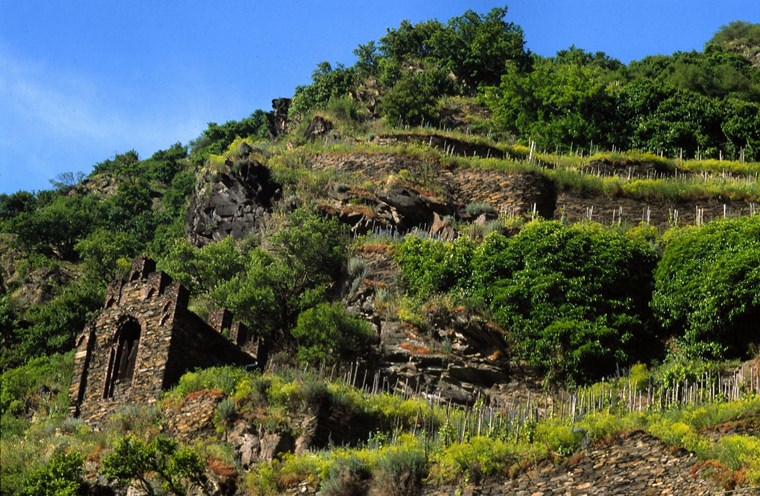 Over the course of history, humans have shaped the river and its landscape. The forests were grazed by herds of animals or managed as coppiced woodland for the production of firewood and tanbark. Arable fields were established on the plateau areas, and meadows in the side valleys. There were many places where mining was carried out. The steep, sunny, south-facing slopes are characterised by rocks and the steep-slope viticulture which has been practiced here for over a thousand years. Aided by the mild climate, a local land use pattern has developed over the centuries, which provides a habitat for an extraordinary variety of animal and plant species. The vivid green lizard basks on the bare rocks, hunts for insects in the dry grassland and finds shelter from predators under the dwarf shrubs.
The Middle Rhine Valley is one of Germany’s most biodiverse regions. Wild roses are a prime example of this, with more than twenty different species to be found within the World Heritage Site. Almost all of them require sunny locations to thrive and are thus found in the vicinity of rocks, on slopes, along paths, at forest edges and on young fallow land.


