
A man-made paradise
Groyne fields on the Rhine near Bingerbrück
For centuries, the Binger Loch was the most dangerous spot for boats navigating the Rhine. About 150 years ago, to reduce the hazards, the groyne fields known as the Rheinkribben were built along the riverbank near Bingerbrück. The interconnected stone walls divide the groynes into a series of still water areas. These groyne fields silted up to varying degrees due to the accumulation of sand and silt. As a result, the engineered structure was transformed into a diverse floodplain habitat.
 Bird species such as nightingales, golden orioles, icterine warblers and lesser spotted woodpeckers thrive in the rich diversity of the floodplain forest. Little grebes, greylag geese and coots find favourable breeding conditions by the water.
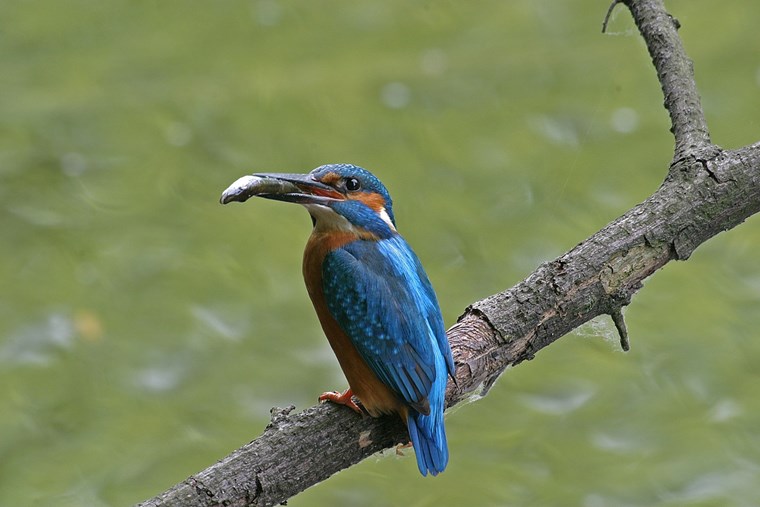
The dazzlingly colourful kingfisher needs natural riverbanks with steep sides. Here it uses it beak to excavate breeding tunnels in the embankment, creating a safe environment for its nesting chambers. With its beautiful blue sheen, this sparrow-sized bird, also known as the flying jewel, darts across the water. It uses the branches of overhanging willows as a perch from which it dives for small fish, tadpoles and water insects. The grass snake also hunts here. Dragonflies patrol above the water surfaces. Nutrias have made their homes in the river bank.
The Rhine groyne fields are a refuge for the creatures that inhabit the floodplain. For this reason, they should not be entered.


