
Life between the tracks
Railway wasteland as a habitat
For more than a hundred years, the railway tracks of the Bingerbrück marshalling yard defined the lives of men and women at the confluence of the Rhine and Nahe rivers. In 1988, the gradual dismantling of the marshalling yard began with the demolition of the locomotive shed. The disused railway facilities evolved into a patchwork of diverse habitats. Many plants and animals benefit from the coexistence of hot, dry, sparsely vegetated gravel areas, meadow-like embankments, bushes and abandoned buildings.
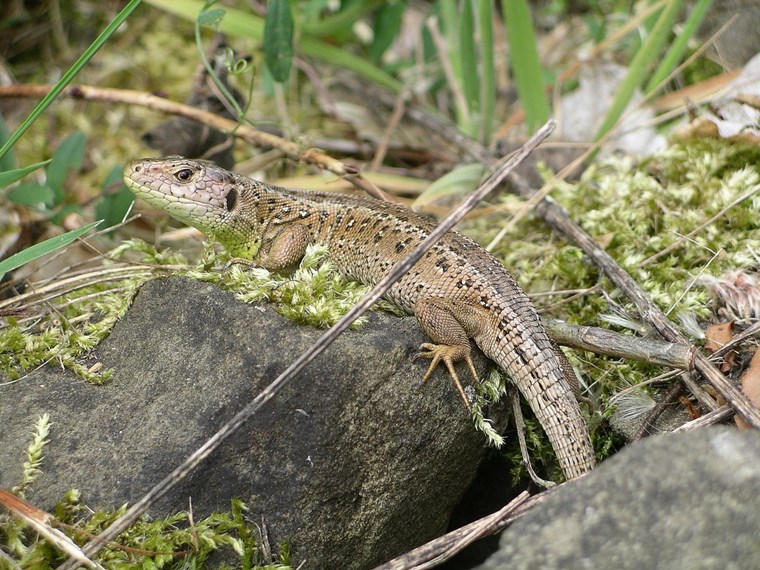 The sand lizard is the characteristic animal of disused railway sites. During the mating season, the males display distinctive green markings. The biodiversity of the habitat offers them considerable advantages. The abundance of flowering plants attracts large numbers of nectar-seeking insects, which are among the reptile's favourite prey. The animals use the sun-warmed dark ballast rock to heat up their bodies. The lizard lays its eggs in the sandy soil between the tracks, where they are incubated by the sun. These areas are also ideal for seeking out a crevice to sleep in at night or for hibernating at a safe depth during winter. Taller plants also provide sufficient cover when enemies approach.
Today, flower-filled meadow strips and colourful perennial beds in the Park am Mäuseturm provide these lizards with much of what they need to live. When walking through these sections of the park, be sure to keep an eye out for these remarkable creatures.


