
A state of constant flux
River valley meadows near Bingen-Gaulsheim
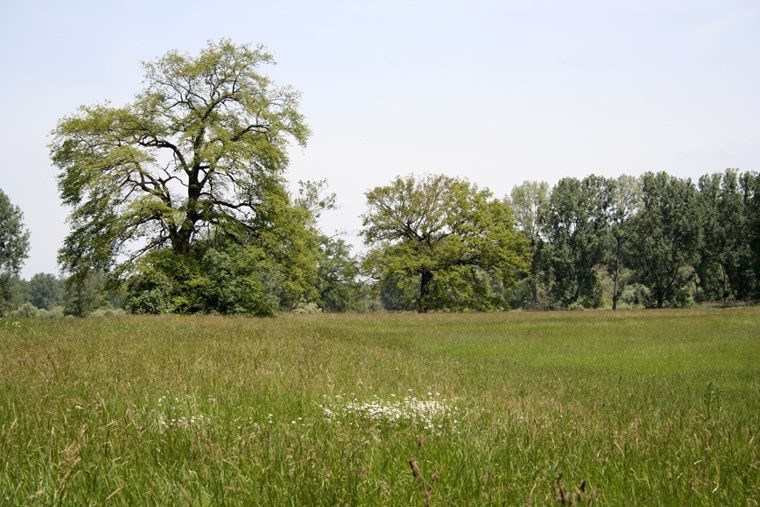 The floodplain of the Upper Rhine between Mainz and Bingen is characterised by an ongoing cycle of flooding and drying. The seasonally wet floodplain meadows are often flooded for weeks on end. In hot, dry summers, however, the frequently clayey soils become severely dehydrated. The repeated flooding of the great river provides natural fertilisation for the floodplain meadows. In the past, fertile river plains were predominantly used as grassland. The meadows were used for haymaking or as bedding meadows, where the straw-like vegetation was mown late in the year and used as litter in cattle sheds.
Today, dense reed beds are forming on rarely-mown areas of the Rhine floodplain near Bingen-Gaulsheim. Bird species such as the marsh warbler and the aquatic warbler feel very at home there. Regular mowing leads to the development of so-called river valley meadows. These provide a habitat for plant species such as the Siberian iris and hog’s fennel, which tolerate both wet and dry conditions. The numerous small ponds that have been created in the Gaulsheim Rhine floodplain meadow offer a habitat for the European tree frog. These sunny, fish- and vegetation-free pools provide the perfect environment for reproduction.
The adhesive discs on the tips of its fingers and toes enable the frog to skilfully climb high up into the taller vegetation along the riverbank in search of food. Although this leaf-green frog only grows to between 3 and 5 centimetres in size, the calls of the males can be heard far and wide during the mating season.


