
A man-made rock landscape
Life in the track ballast
In the 19th century the construction of railway lines created an infrastructure that was exceptionally important for the economic development of the Rhine Valley. Conveniently located at the mouth of the River Nahe, Bingerbrück railway station grew to become an important marshalling yard with 30 tracks.
The characteristics of the railway tracks with their beds of stone ballast are similar to those of natural rock. They are dry, hot, and sparsely vegetated, creating an extreme habitat for animals and plants.
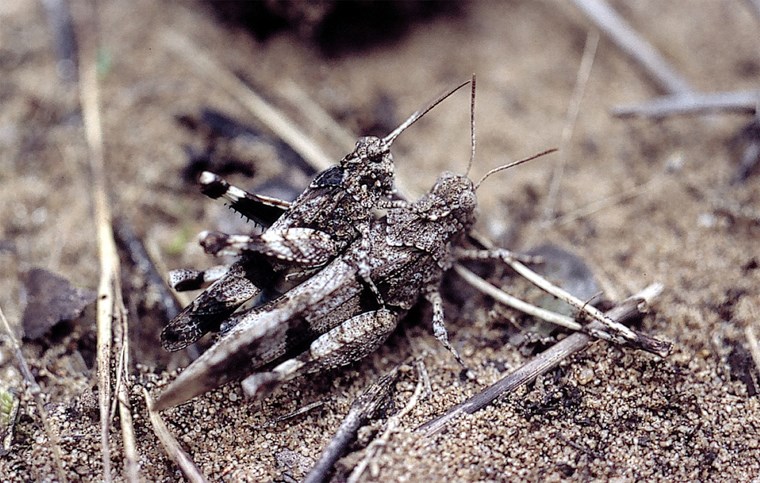 In extreme situations, creatures such as the blue-winged grasshopper can retreat to shadier places. Any plants must be able to cope with heat and drought. Many species are thus specially adapted to surviving under these conditions. Small leaves, a thick layer of wax or a woolly layer of hairs protect against unnecessary water loss. Species such as the biting stonecrop can store water for periods of drought in their thick, fleshy leaves. Short-lived species such as the rue-leaved saxifrage survive the summer drought by protecting themselves in the form of seeds.
A few weeks in spring are enough for them to complete their entire life cycle. The fragrant scent of wild thyme also provides natural protection. Through the evaporation of essential oils, it lowers its temperature without losing any water.
Skeletonweed, on the other hand, has almost completely dispensed with its water-evaporating leaves. In summer, it can meet all its energy requirements by using its photosynthesising stems.


