
A steppe on the Rhine
Sandy areas between Mainz and Bingen
 Around 18,000 years ago, at the end of the last ice age, the Upper Rhine Valley had a dry, cold climate with sparse vegetation. The Rhine transported gravel from the Alps, which quickly weathered in the harsh climate. The prevailing north-westerly winds blew the fine material out of the barren alluvial soil. Whilst the light clay particles were carried far into the surrounding countryside and deposited there as loess, the sands piled up at the edge of the wide river valley to form huge aeolian sand dunes.
The onset of a warming climate promoted the migration of plants from the steppe regions of Eastern Europe and Asia. Numerous species from the Mediterranean region also established themselves here, where the dry, warm climate and calcareous sandy soils provided ideal conditions. Due to the low precipitation in the north of what is now Rheinhessen, the lime content in the sand remained high.
The area of limestone drift sand stretching from Mainz to the outskirts of Bingen is still home to many rare plant species from these regions, such as pheasant's eye and feather grass. One particularly rare species is the golden drop. This is the only place it grows in Germany.
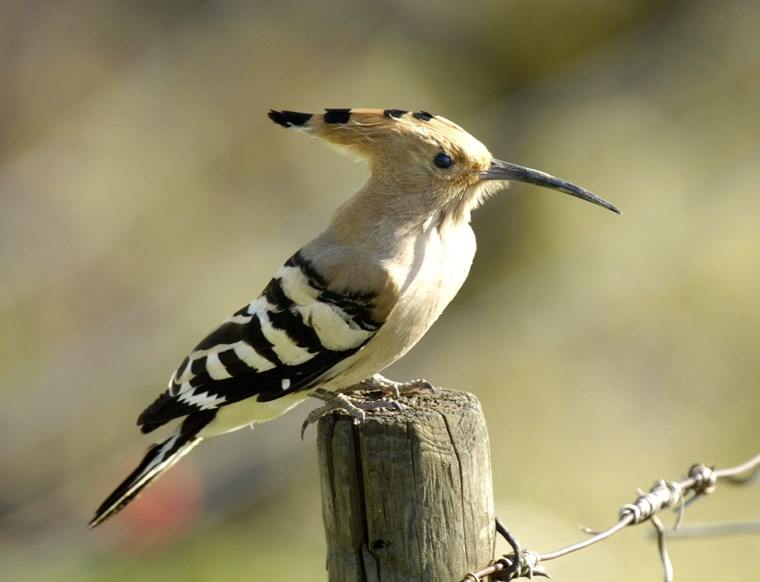
The dunes, open sandy areas and meadow orchards are all used by the hoopoe.
It runs around the orchards, meadows and sandy paths with low vegetation, probing around with its long, curved beak, in search of its preferred diet of large beetles, grasshoppers and crickets. It finds suitable nesting sites in the hollows of old fruit trees. This rust-brown bird, which is roughly the size of a thrush, is instantly recognisable thanks to its striking black and white wing and tail patterns and distinctive crest.


