
Living in floral paradise
The wild bees
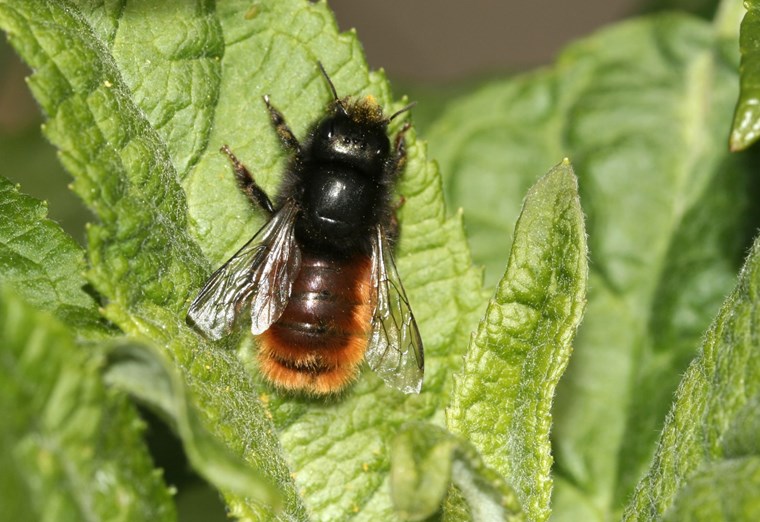 One of the best-known insects is the honey bee, which lives in colonies. As well as this semi-wild insect, there are around 550 other wild bee species in Germany. Most of these species live alone. They range in size from masked bees, which are only a few millimetres long, to carpenter bees, which measure almost three centimetres.
Unlike wasps, all bees are herbivores and they feed on plant nectar. The females feed their offspring with protein-rich flower pollen. During their search for pollen, they play an important role in plant pollination, because only pollinated flowers will go on to produce fruit. There are highly specialised wild bee species, such as the viper's bugloss mason bee, which collect pollen and nectar from only a single plant species. Others utilise a wide range of forage plants.
Wild bees require special structures for reproduction. Clay walls, dead plant material, open sandy soils and small cavities in rocks or masonry provide them with suitable places in which to lay their eggs. They also appreciate nesting aids such as insect hotels. The European orchard bee, for instance, builds several brood cells one behind the other in an elongated cavity such as a plant stem. The female lays a pollen supply and an egg in each cell. She builds the cell partitions from a mixture of glandular secretions and clay. Only the protective sealing plug is visible from the outside. Several weeks later, the larvae hatch. They consume the pollen before pupating in their brood cell. The adult bees hatch in the following spring.


