
A breeding and resting place
Wildlife on the Rhine at Bingen
 After the Volga and the Danube, the Rhine is the longest and most water-rich river in Europe. For centuries it has been used as a trade and transport route. Today, it is Europe’s most important inland waterway.
This large river is also a habitat for many fish, crabs, mussels and other animals. In the year 2000, 63 species of fish were recorded in the Rhine. Today, fish species such as roach, perch, eel and bleak are forming abundant populations once more.
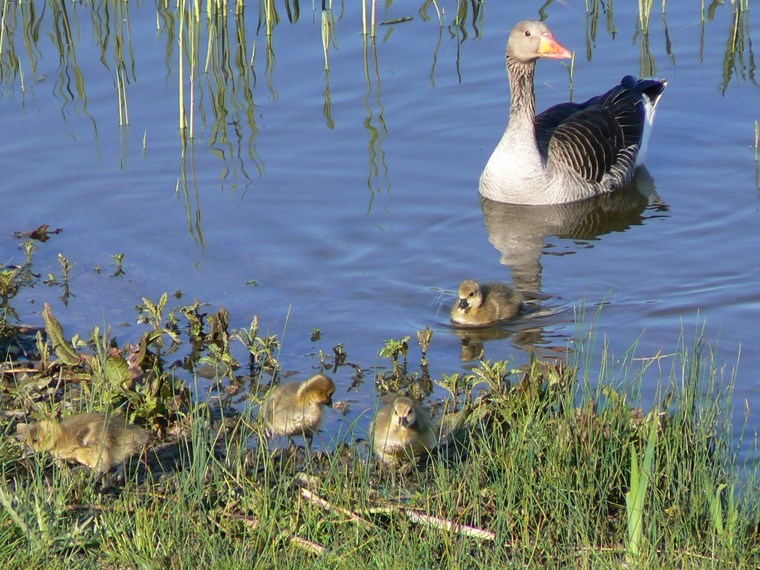
Many migratory birds follow the Rhine and its tributaries, using them as central guidelines on their journeys between north and south, between their summer and winter habitats. Geese, ducks, mergansers, gulls, terns and many other birds stop off at the Rhine near Bingen to rest and feed.
In summer, too, there are plenty of birds to be found along the Rhine and Nahe rivers. Gleaming metallic cormorants perch on the guide dams and quartzite rocks at the Binger Loch, their wings spread out to dry their plumage. These brilliant divers skilfully hunt for fish underwater. In summer, the black kite hatches its eggs in the towering trees on the banks of the Rhine and on the islands. This impressive bird with a wingspan of up to 150 cm - also known as the “eagle of the floodplain” - prefers to hunt for its prey in or near water.
Due to its special significance for resting waders and waterfowl, as well as for breeding birds, the Rhine riverbank and its expanses of water at the Mäuseturm park are part of a European bird sanctuary.


