
From all corners of the world
New arrivals from the animal and plant kingdoms
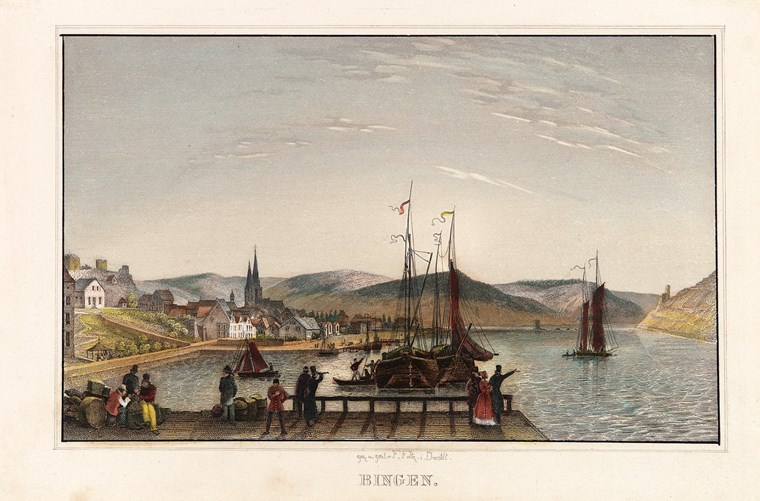 For centuries the Middle Rhine Valley has been a central transport artery connecting the north and the south. Countless numbers of people travel through the valley — by boat, train, car, bicycle, or on foot. They are followed by many plants and animals, which use the Rhine and its transportation routes to spread. Here at the confluence of the Rhine and Nahe rivers, you’ll encounter species from every continent.
People have been bringing plant and animal species to Europe since the 16th century, as ornamental plants, as crops or as game animals. Some plants have inadvertently spread beyond private gardens and some animals have managed to escape from human captivity. Other species are introduced when plant seeds are accidentally imported along with commercial goods. A typical plant now found growing along railway lines is the narrow-leaved ragwort, which originates from South Africa. The clammy goosefoot is native to Australia and found almost exclusively at railway stations. Originally from China, Buddleia davidii, also known as the butterfly bush, was introduced to Europe as an ornamental plant.
One of the more conspicuous newcomers to the banks of the Rhine is Himalayan balsam. Many animal species have found their way to Bingen via the Rhine. Basket clams are thought to have arrived here from Asian waters in the ballast water of large ships. The American spinycheek crayfish is used in crustacean farming in many countries around the world. It has migrated into many natural river systems, where it spreads rapidly.


